


2026 Subaru Forester vs. 2026 Mitsubishi Outlander: Two SUVs, Two Ways to Explore Vancouver
September 30 2026,
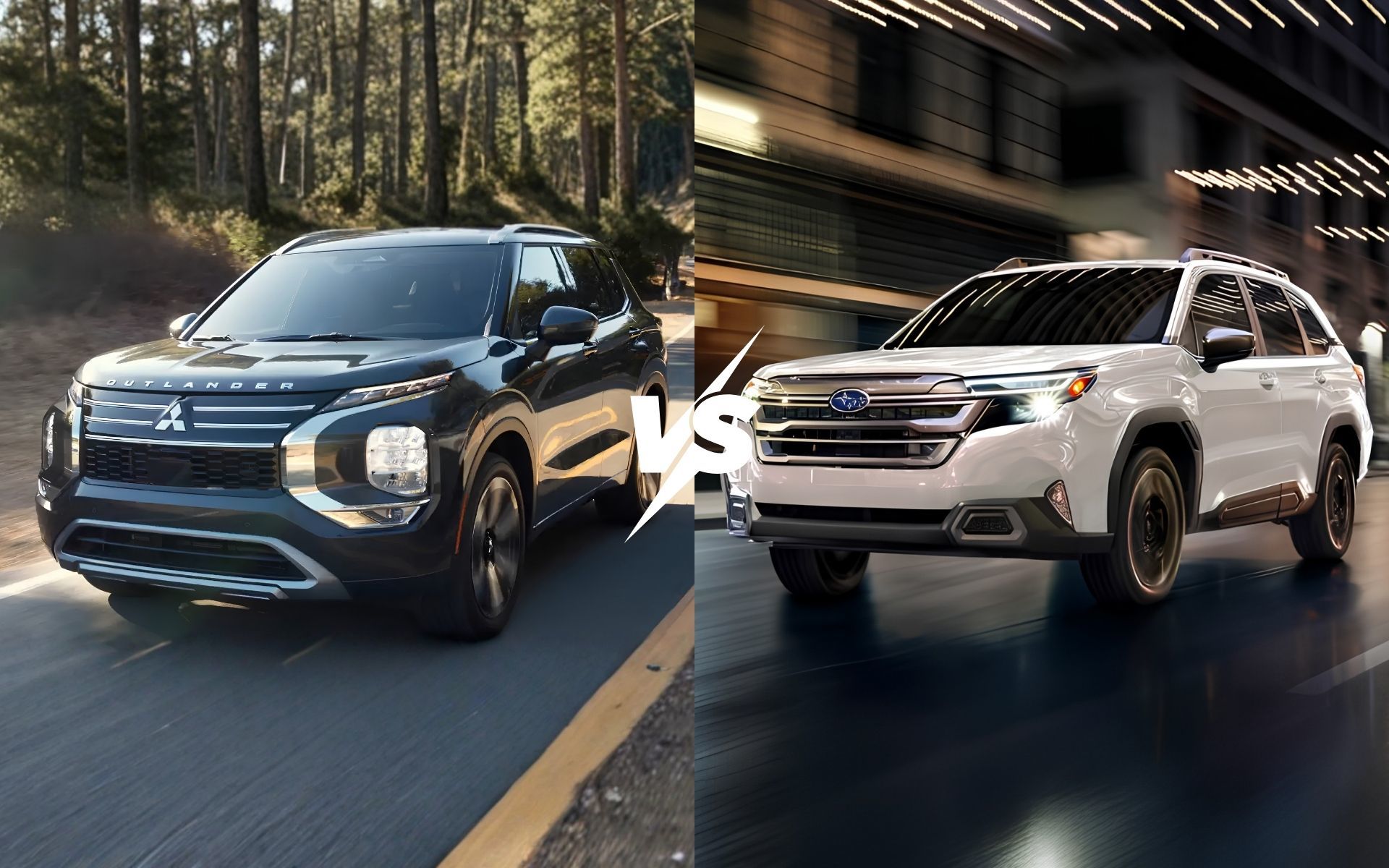
When shopping for a compact SUV in Vancouver, versatility matters. From daily drives across the city to weekend trips beyond the Lower Mainland, an SUV needs to handle changing road conditions, passengers, cargo, and plenty of unpredictable weather.
The 2026 Subaru Forester and 2026 Mitsubishi Outlander approach that job differently. The Forester focuses on standard all-wheel-drive capability, driver-assistance technology, and everyday practicality, while the Outlander brings three-row seating, a mild-hybrid powertrain, and Mitsubishi's Super All-Wheel Control system.
So, how do these two Canadian-market SUVs compare?
Two Different Takes on the Modern SUV
The 2026 Forester enters its sixth generation with a redesigned exterior, a refined cabin, and a strong focus on safety and all-weather capability. Subaru Canada equips every Forester with Symmetrical Full-Time AWD, while its available powertrains include a 2.5-litre BOXER four-cylinder and a 2.5-litre Subaru Hybrid powertrain.
The 2026 Outlander takes another route. Mitsubishi describes it as a three-row compact SUV with seating for up to seven, and for 2026 it introduces a new 1.5-litre turbocharged four-cylinder gasoline engine paired with a mild-hybrid system. The system uses a belt-driven starter generator and 48V lithium-ion battery to assist acceleration and recover energy during deceleration.
For Vancouver families, that creates an important distinction: the Forester emphasizes all-weather confidence and compact-SUV practicality, while the Outlander adds the flexibility of a third row.
Power Meets Everyday Efficiency
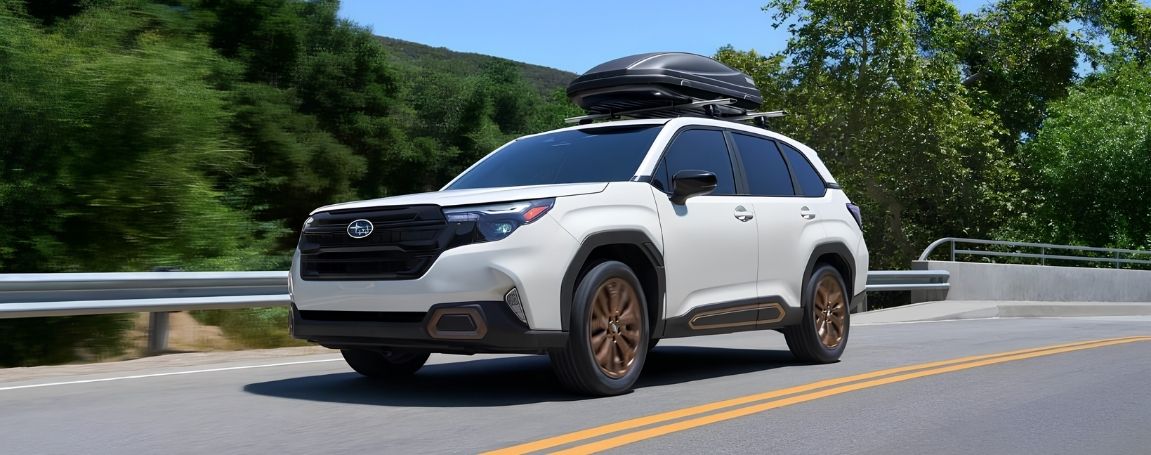
The standard 2026 Forester uses a naturally aspirated 2.5-litre SUBARU BOXER four-cylinder producing 180 horsepower and 178 lb-ft of torque. Subaru Canada lists fuel consumption at 9.1 L/100 km in the city and 7.2 L/100 km on the highway for the conventional powertrain. The engine works with a Lineartronic CVT and Symmetrical Full-Time AWD.
There is also a 2026 Forester Hybrid. Its 2.5-litre hybrid powertrain produces 194 horsepower, with Subaru Canada listing fuel consumption of 6.8 L/100 km city and 7.0 L/100 km highway for the Hybrid Premier.
The 2026 Outlander introduces a 1.5-litre turbocharged four-cylinder with mild-hybrid technology. Mitsubishi Canada lists combined fuel consumption of 8.7 L/100 km, with 9.4 L/100 km in the city and 7.8 L/100 km on the highway. The mild-hybrid system is designed to provide additional assistance during takeoff while recovering energy during braking and deceleration.
The difference here is less about simply choosing the vehicle with more power and more about how each SUV uses electrification and drivetrain technology.
Vancouver Weather Calls for Confident Traction
Rain is a regular part of life in Vancouver, while trips into the mountains can bring snow, ice, and changing road conditions. Both SUVs bring all-wheel-drive systems designed for varied surfaces, but their approaches are different.
The Forester comes standard with Subaru Symmetrical Full-Time AWD, along with X-MODE on applicable versions, Active Torque Vectoring, Traction Control, and Vehicle Dynamics Control.
The Outlander uses Mitsubishi's Super All-Wheel Control (S-AWC) system. It offers six selectable drive modes: Eco, Normal, Tarmac, Gravel, Snow, and Mud. This gives drivers different settings depending on the surface and driving conditions.
For someone commuting through Vancouver throughout the year, both provide technologies designed around traction and control. The Forester's AWD system is standard across the lineup, while the Outlander combines S-AWC with selectable driving modes.
More Seats or More Compact Practicality?
Here's where the Outlander creates a major difference.
The 2026 Outlander offers 7-passenger seating in a 5+2 configuration, making its third row useful when you need additional seating capacity.
The Forester is positioned as a compact SUV with a five-passenger layout, giving it a more straightforward two-row configuration. Its interior is designed around everyday passenger and cargo practicality, while available features include a power liftgate with hands-free operation and various cargo-area conveniences.
That makes the choice relatively simple from a lifestyle perspective. If carrying additional passengers is a regular requirement, the Outlander's third row changes the equation. If most trips involve fewer passengers and you prefer a two-row compact SUV, the Forester keeps things simpler.
Technology Takes Two Different Paths
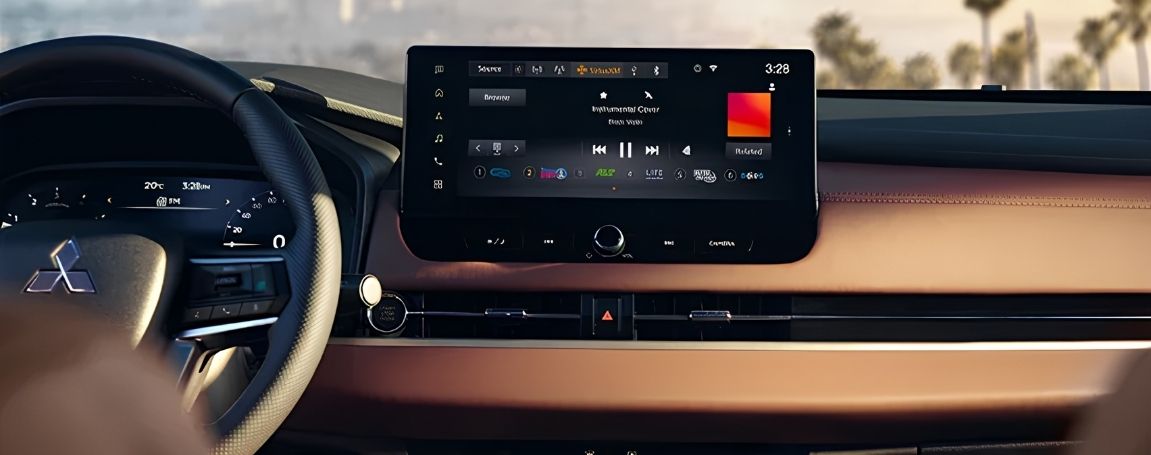
Inside the 2026 Forester, available technology includes an 11.6-inch tablet-style infotainment display, wireless Apple CarPlay and Android Auto, wireless phone charging, and available GPS navigation. Higher trims can also feature a Harman Kardon premium audio system and MySubaru Connected Services.
The Outlander counters with a 12.3-inch Smartphone Link Display Audio system, wireless Apple CarPlay and Android Auto, and available Dynamic Sound Yamaha audio. Depending on the trim, buyers can also get a 12.3-inch digital driver display, navigation, Mitsubishi Connect, and a 10.8-inch head-up display.
For drivers who spend plenty of time navigating Vancouver streets, both offer modern connectivity, but the available screen and display setup differs between the two.
Safety Is a Major Part of the Forester Story
Subaru puts significant emphasis on driver assistance in the 2026 Forester. The latest EyeSight system uses a wide-angle mono camera and includes features such as Pre-Collision Braking, Adaptive Cruise Control with Vehicle Hold, Lane Centring Assist, Lane Keep Assist, Emergency Lane Keep Assist, Automatic Emergency Steering, and Emergency Stop Assist.
The Forester can also offer Blind Spot Detection, Lane Change Assist, Rear Cross Traffic Alert, Reverse Automatic Braking, and DriverFocus Distraction Mitigation, depending on trim.
The Outlander also offers a broad collection of driver-assistance features. Depending on trim, these include Adaptive Cruise Control, Lane Departure Prevention, Active Blind Spot Assist, Traffic Sign Recognition, and front parking sensors.
2026 Subaru Forester vs. 2026 Mitsubishi Outlander at a Glance
|
Feature |
2026 Subaru Forester |
2026 Mitsubishi Outlander |
|
Seating |
5 passengers |
Up to 7 passengers |
|
Standard AWD |
Symmetrical Full-Time AWD |
S-AWC |
|
Standard powertrain |
2.5-litre BOXER, 180 hp |
1.5-litre turbo mild hybrid |
|
Hybrid option |
2.5-litre Subaru Hybrid, 194 hp |
Mild-hybrid system |
|
Combined fuel economy |
Hybrid Premier: 6.8–7.0 L/100 km city/hwy |
8.7 L/100 km |
|
Infotainment |
Available 11.6-inch display |
12.3-inch display |
|
Driver assistance |
EyeSight |
Mitsubishi driver-assistance systems |
|
Drive modes |
X-MODE available |
Six S-AWC modes |
Specifications and equipment vary by trim. Figures are based on Canadian manufacturer information.
Which SUV Fits Your Vancouver Routine?
The 2026 Subaru Forester and 2026 Mitsubishi Outlander are designed around different priorities. The Forester brings standard Symmetrical Full-Time AWD, Subaru EyeSight technology, available hybrid efficiency, and a two-row layout suited to everyday driving and weekend adventures.
The Outlander puts more emphasis on passenger flexibility, with three-row seating, a mild-hybrid powertrain, S-AWC with six drive modes, and a technology-rich cabin.
For Vancouver drivers comparing the two, the key question is what your daily routine looks like. Do you want the straightforward practicality and standard AWD approach of the Forester, or would the Outlander's additional seating and selectable S-AWC modes better suit your family and travel needs?
At Docksteader Subaru in Vancouver, drivers can explore the 2026 Subaru Forester and learn more about its available trims, features, and capabilities before making their next SUV decision.
