


2026 Subaru Forester vs 2026 Ford Escape: Which SUV Fits Your Lifestyle?
August 26 2026,
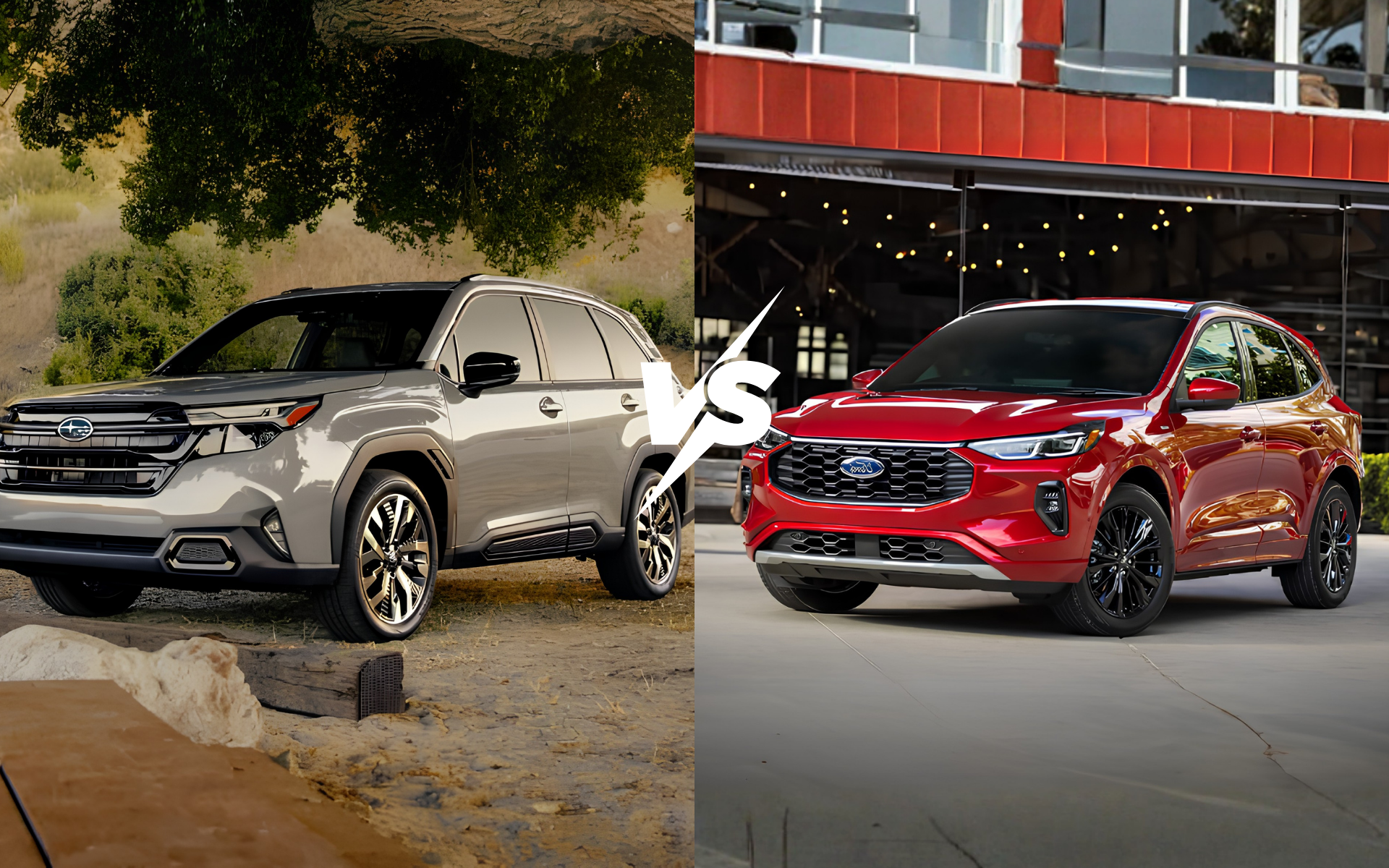
Choosing a compact SUV in Vancouver means balancing several priorities at once. Wet roads, mountain trips, daily commuting, passenger space, cargo flexibility, and fuel consumption can all influence which model makes the most sense.
The 2026 Subaru Forester and 2026 Ford Escape take distinctly different approaches. Subaru makes standard all-wheel drive and all-weather capability central to the Forester, while Ford gives Escape shoppers a wider selection of gasoline, hybrid, and plug-in hybrid powertrains.
Build & Price your own 2026 Subaru Crosstrek
Performance: Standard AWD or More Powertrain Choice?
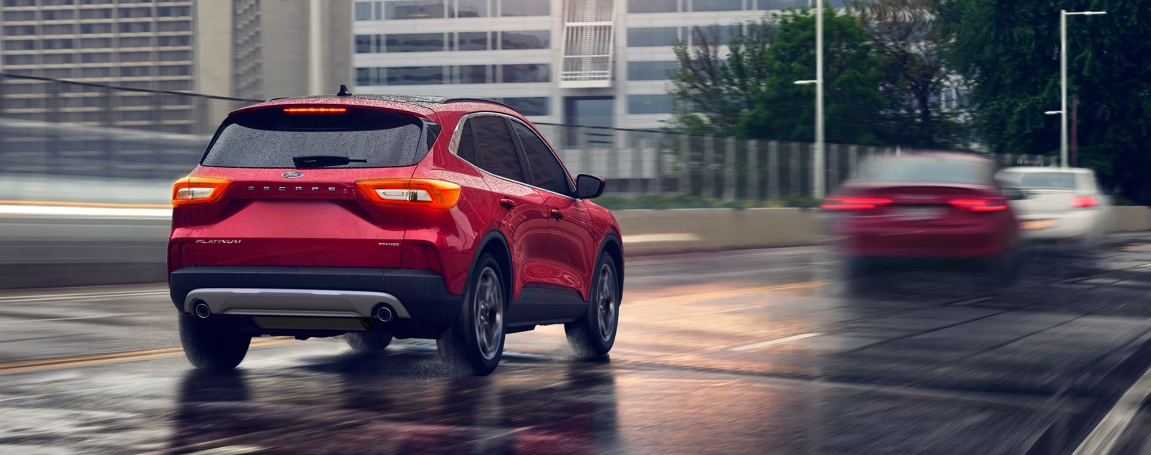
The Forester uses a 2.5-litre SUBARU BOXER four-cylinder engine producing 180 horsepower and 178 lb-ft of torque. It works with a Lineartronic CVT and Subaru Symmetrical Full-Time AWD, which is standard across the Canadian lineup.
Rather than focusing on maximum output, the powertrain is designed around predictable performance and traction. That can be useful for Vancouver drivers who regularly travel through heavy rain or head toward the North Shore, Whistler, or other areas where road conditions can change quickly.
The Escape offers more choices. Its 1.5-litre EcoBoost produces 180 horsepower and 199 lb-ft of torque, while the available 2.0-litre EcoBoost increases output to 250 horsepower and 280 lb-ft. Ford also offers hybrid and plug-in hybrid powertrains for shoppers who place greater emphasis on efficiency.
Gasoline versions use an eight-speed automatic transmission, while the hybrid and plug-in hybrid models use an eCVT. AWD availability varies by powertrain, while the plug-in hybrid uses front-wheel drive.
That makes the comparison fairly straightforward: the Subaru provides a consistent AWD-focused setup, while Ford gives shoppers more flexibility to choose a powertrain around performance, efficiency, or driving needs.
Fuel Economy: Different Routes to Better Efficiency
Fuel consumption is where the Escape's wider powertrain lineup becomes particularly interesting.
The 1.5-litre Escape is rated at approximately 8.9 L/100 km city and 6.9 highway with front-wheel drive, or 9.2 city and 7.4 highway with AWD.
The available hybrid is rated at approximately 5.6 L/100 km city and 6.5 highway, while the plug-in hybrid's rating is approximately 2.3 Le/100 km under the applicable Canadian testing methodology.
The 2026 Forester also expands its choices with an available 194-horsepower hybrid powertrain using a 1.1-kWh lithium-ion traction battery and Hybrid Lineartronic CVT.
Consequently, the efficiency question depends on how the vehicle will be driven. A predominantly urban commuter may find an electrified powertrain attractive, while someone who regularly prioritizes standard AWD and conventional gasoline operation may prefer the Forester's straightforward configuration.
Space for Passengers, Gear, and Weekend Plans
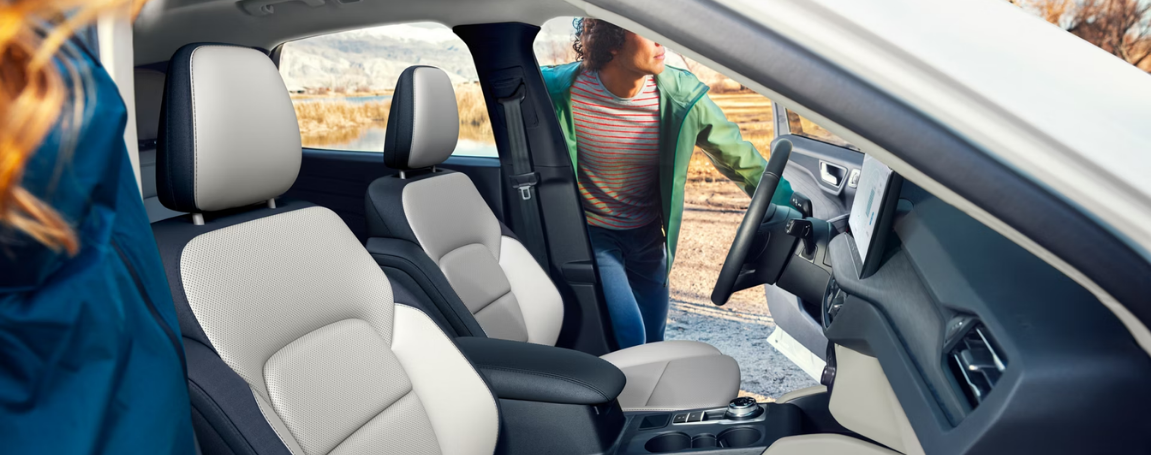
Both SUVs seat five passengers, but the Forester has a particularly practical interior layout.
With the rear seats folded, Subaru lists up to 1,957 litres of cargo capacity. Its upright design, generous windows, and relatively open cabin also contribute to useful everyday visibility.
The Escape provides up to 1,852 litres of cargo volume behind the first row on applicable gasoline models. Hybrid and plug-in hybrid versions provide up to 1,722 litres.
That gives the Subaru a small advantage in maximum cargo capacity. For shoppers who regularly carry camping equipment, sports gear, luggage, or larger purchases, that additional room can be useful.
Towing shifts the advantage toward Ford. When properly equipped with the 2.0-litre EcoBoost and Class II Trailer Tow Package, the Escape can tow up to 1,587 kg. Other configurations have lower ratings.
Technology Designed Around Daily Convenience
The Forester offers an 11.6-inch touchscreen on many Canadian trims, with Apple CarPlay and Android Auto integration. Depending on the trim, shoppers can also access navigation, wireless smartphone connectivity, a Harman Kardon premium audio system, and a 360-degree Surround View Monitor.
The Escape uses Ford SYNC 4 and supports wireless Apple CarPlay and Android Auto. Available technology can include connected navigation, enhanced voice recognition, and additional driver-assistance functions.
The difference isn't about one SUV lacking modern technology. Subaru emphasizes a straightforward interface and driver-focused layout, while Ford provides more opportunity to combine technology with different powertrain configurations.
Safety for Vancouver Roads and Beyond
Safety is a significant consideration when driving through changing weather and busy urban traffic.
The Forester's EyeSight Driver Assist Technology includes features such as Pre-Collision Braking, Adaptive Cruise Control with Vehicle Hold, Lane Centring Assist, Emergency Lane Keep Assist, Automatic Emergency Steering, and Emergency Stop Assist.
Depending on trim, Subaru also offers Blind Spot Detection, Lane Change Assist, Rear Cross Traffic Alert, Reverse Automatic Braking, and a 360-degree Surround View Monitor.
The Escape counters with Ford Co-Pilot360 technologies. Available systems include BLIS with Cross-Traffic Alert, while higher equipment levels can add Co-Pilot360 Assist+ features and adaptive cruise control.
These technologies are intended to support an attentive driver rather than replace one. In Vancouver, they can be especially useful during congested commutes, highway travel, lane changes, and low-speed parking manoeuvres.
Which SUV Makes More Sense for Your Driving?
The Forester is a strong fit for shoppers who want standard Symmetrical Full-Time AWD, practical cargo space, strong visibility, and a safety-focused equipment strategy. The available hybrid powertrain also gives the 2026 lineup another option for drivers seeking greater efficiency.
The Escape is more appealing to buyers who value powertrain choice. Its gasoline engines cover different performance needs, while the hybrid and plug-in hybrid versions offer alternatives for shoppers focused on reducing fuel consumption.
For Vancouver drivers, the decision ultimately comes down to priorities. If all-weather traction, visibility, cargo flexibility, and a consistent AWD setup matter most, the Subaru deserves serious consideration. If powertrain variety, available towing, or electrified driving matters more, the Ford offers greater flexibility.
Quick Comparison
|
Feature |
2026 Subaru Forester |
2026 Ford Escape |
|
Standard Engine |
2.5-litre BOXER four-cylinder |
1.5-litre EcoBoost |
|
Horsepower |
180 hp |
180 hp |
|
Max Available Power |
194 hp hybrid |
250 hp gas |
|
AWD |
Standard |
Available, configuration dependent |
|
Seating |
5 |
5 |
|
Max Cargo |
1,957 litres |
Up to 1,852 litres |
|
Max Towing |
Configuration dependent |
Up to 3,500 lbs |
|
Electrified Option |
Hybrid |
Hybrid & PHEV |
Find Your Next SUV in Vancouver
Specifications can narrow the shortlist, but experiencing the seating position, visibility, cabin layout, and driving feel can make the final decision much easier. Visit Docksteader Subaru in Vancouver to explore available Forester inventory, ask about current offers and financing options, and arrange a test drive with the dealership team.
